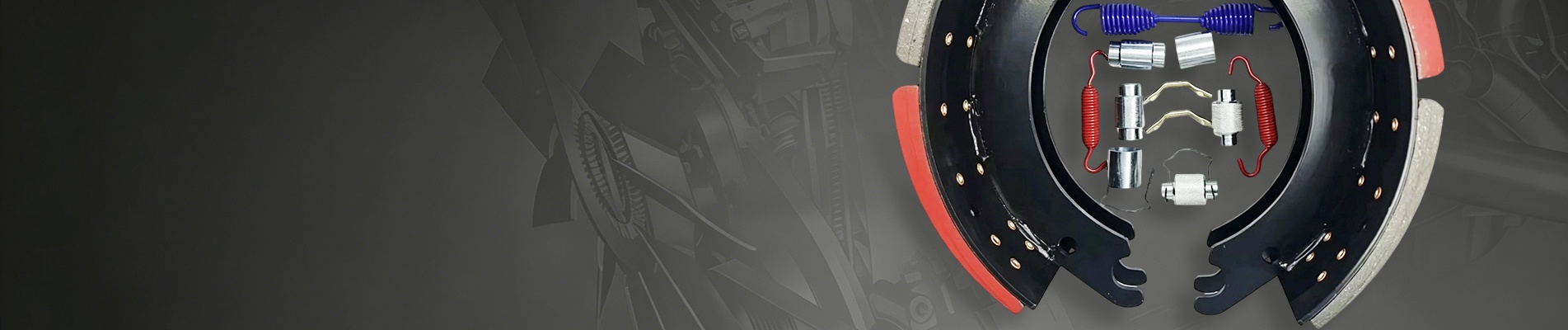
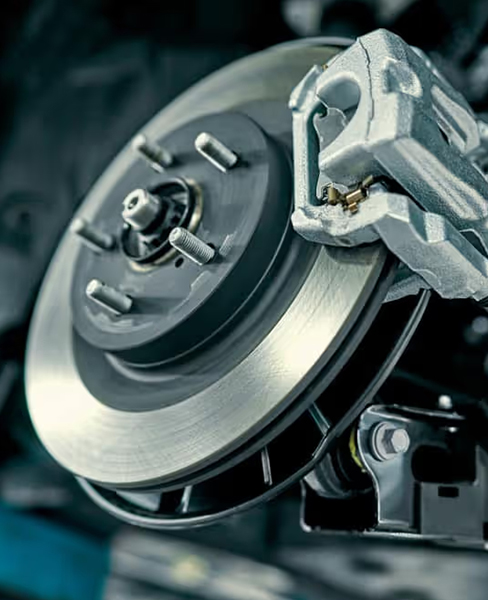
When stocking foundation drum brake parts for Class 7 and Class 8 commercial vehicles across North America, few part numbers move with higher velocity than 4515Q and 4707Q. Both share the standard 16.5" x 7" drum footprint, rely on Meritor-style Q-series dual-anchor quick-change geometry, and are rated for severe-service 20,000 to 23,000 lbs Gross Axle Weight Ratings (GAWR).
Despite looking almost identical at first glance, installing the wrong core profile or cross-referencing incorrect friction hardware leads to uneven lining contact, premature taper wear, s-cam roller binding, and costly FMVSS-121 compliance failures during roadside DOT inspections.
This technical comparison breaks down the exact dimensional differences, GAWR capacities, web contours, and application setups between 4515Q and 4707Q brake shoes to optimize inventory stocking for parts distributors and reduce maintenance bay turnaround time.
1. Dimensional Nuances: Standard Q vs. Q-Plus Foundation Geometry
Both brake shoes run inside standard 16.5-inch diameter drums with a 7-inch shoe table rim, but their structural kinematics differ significantly:
- Web Plate Contour and Thickness: The 4515Q represents the standard quick-change design popularized across North American drive and trailer axles for decades. Its web profile is stamped to accommodate standard-stroke chambers and traditional camshaft angles. The 4707Q serves as the backbone of the Meritor Q-Plus extended-service architecture. It incorporates refined web geometry engineered to provide balanced radial deflection when the s-cam exerts outward expansion pressure.
- Cam Roller Pocket Depth: The critical mechanical difference between the two skeletons lies in the cam roller and anchor pin positioning. The 4707Q features an adjusted cam roller pocket depth and modified pivot radius compared to the older 4515Q. This design accommodates thicker friction material and longer camshaft strokes, delaying friction fade over extended highway intervals.
- Die-Coined Arc Calibration: Because commercial drum brakes require immediate 100% surface-to-drum contact upon installation, high-grade unlined skeletons of both profiles must undergo high-tonnage hydraulic die-coining. A die-coined 16.5" arc ensures that newly attached friction blocks seat flat against the table rim without edge pinching, high-pressure hot spots, or premature block cracking.
2. GAWR Ratings, Duty Cycles, and Axle Applications
Both 4515Q and 4707Q are certified for 20,000 to 23,000 lbs Gross Axle Weight Ratings (GAWR), but their service life profiles reflect differing vehicle configurations:
4515Q Application Profile
- Chassis Types: Standard dry freight trailers, intermodal container chassis, older Class 7–8 vocational tractors, straight dump chassis, and aggregate haulers.
- Fleet Fitment: Most prevalent across legacy trailers and regional distribution fleets. It is standard inventory for fleet maintenance facilities managing diverse multi-brand aging equipment.
4707Q Application Profile
- Chassis Types: Interstate Class 8 line-haul highway tractors (Freightliner, Kenworth, Peterbilt, Navistar), tandem-axle refrigerated reefers, high-cube dry vans, and severe-service heavy-duty line-haul setups.
- Fleet Fitment: Standard for extended-service PM programs. Fleets aiming to push reline intervals past 300,000+ miles typically specify Q-Plus 4707Q assemblies paired with high-performance friction blocks.
3. Lining Matrix & Rivet Pattern Differences (FMSI 4515 vs 4707)
A common mistake in maintenance shops is attempting to rivet 4515 friction blocks onto 4707Q steel cores or vice-versa.
- Rivet Hole Patterns: While both rely on standard commercial punch patterns, the rivet hole spacing, counterbore depths, and step contours of FMSI 4515 and FMSI 4707 friction linings are distinct. Forcing an incompatible lining profile creates hollow gaps beneath the friction block, accelerating lining fracture under severe torque spikes.
- Friction Thickness & Cam Clearance: Q-Plus 4707 friction blocks are formulated with tailored taper profiles engineered to work in tandem with the Q-Plus camshaft offset. Fastening standard 4515 friction blocks onto a 4707Q core shifts the resting s-cam position, altering automatic slack adjuster stroke angles and potentially triggering roadside DOT out-of-adjustment violations.
4. Hardware Kit Pairing: Selecting the Right Overhaul Set
Operating heat inside 16.5" x 7" drum brake assemblies regularly surpasses 750°F (400°C) during continuous mountain descents and dense urban delivery routes. This extreme thermal cycling degrades return spring elasticity and wears flat spots onto cam rollers.
- 4515Q Hardware: Uses standard dual-spring quick-change configurations with matched anchor pin retention clips and case-hardened rollers.
- 4707Q Hardware: Requires high-tensile oil-tempered return springs specifically rated for Q-Plus retraction forces, alongside heavy-duty induction-hardened rollers to prevent camshaft grooving.
- Universal Multi-Fit Hardware Solutions: To streamline inventory SKUs, parts distributors often stock universal master kits—such as the 4707 Repair Kit—which are engineered to service both 4515Q and 4707Q foundations, along with related 4515X, 4705, and 4711Q profiles.
B2B Inventory Recommendation for Distributors and Fleet Warehouses
For commercial parts wholesalers and heavy-duty aftermarket distributors, maintaining an optimal inventory ratio between these two SKUs is essential:
1. Maintain a 60/40 or 70/30 Stocking Ratio: Depending on regional fleet demographics, 4707Q has become the primary mover for modern Class 8 line-haul tractor fleets, while 4515Q remains an indispensable fast-mover for container depots, trailer rebuilders, and intermodal corridors.
2. Promote Boxed Overhaul Kits Over Bare Cores: While reline shops regularly source bare unlined steel skeletons for in-house riveting, commercial fleets prefer pre-riveted, lined Brake Shoe Kits that package matched return springs, pins, and rollers inside a single carton. This eliminates mixed-hardware errors and cuts maintenance bay downtime.
3. Verify Manufacturing Standards on Steel Skeletons: Whether purchasing 4515Q or 4707Q bare skeletons, verify that the supplier uses automated projection welding between the web and rim plate, full hydraulic die-coining, and industrial electrostatic powder coating**. High weld shear strength and corrosion defense against winter calcium chloride de-icers prevent shoe twisting and rust jacking throughout harsh North American operating seasons.
Direct Factory Sourcing for Commercial Foundation Brakes
We supply direct factory containerload shipments and palletized wholesale orders of North American Class 7–8 commercial foundation brake components, including **unlined steel shoe skeletons (4515Q, 4707Q, 4515E, 4709), FMVSS-121 certified friction linings, and single-step wheel-end hardware overhaul sets. Custom laser edge marking, private-label master cartons, and mixed-SKU container loading are available for regional distributors and fleet supply chains.